IPBurger Review
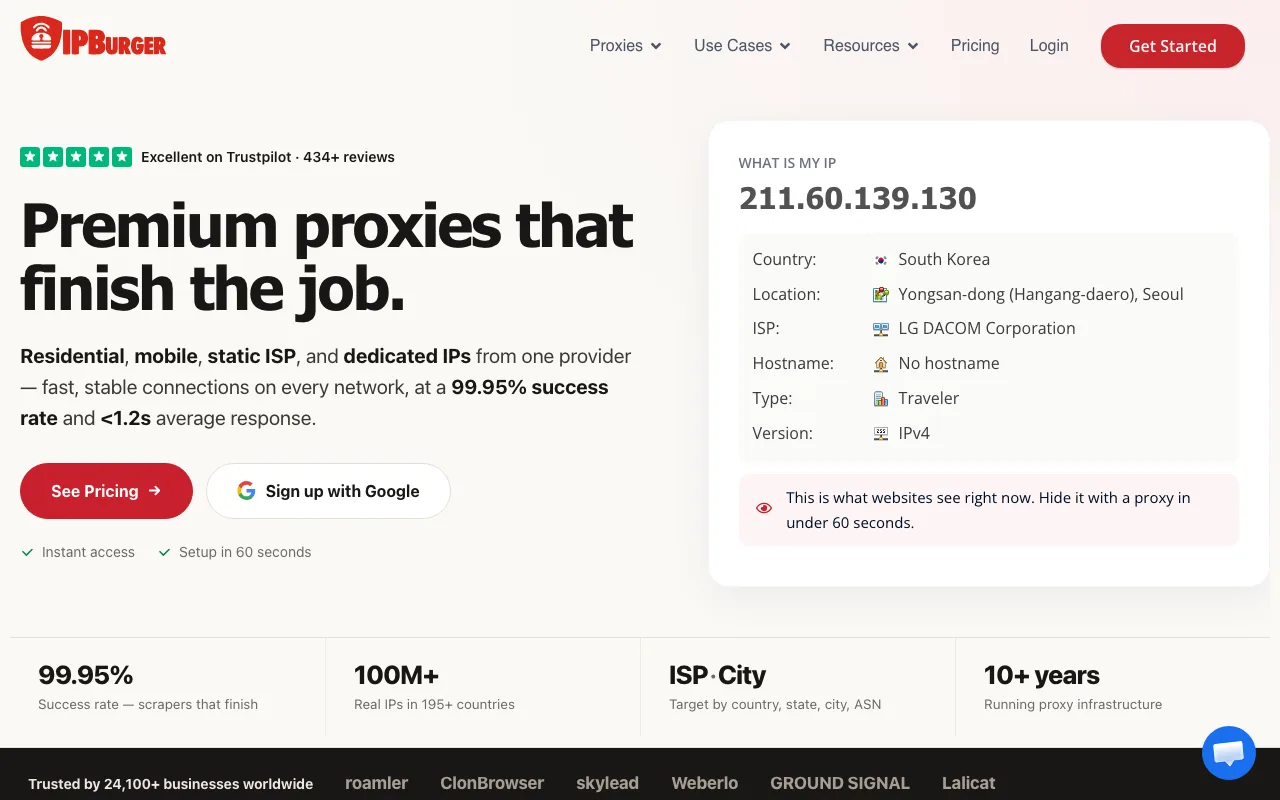
IPBurger sells something rare: a dedicated residential IP an individual can actually buy. The rotating pool is overpriced and the VPN is an afterthought.
Review last updated 2026-08-20 · How we rate providers
Scorecard
Pros
- Dedicated residential IPs, which few vendors sell to individuals
- Sells a consumer VPN and proxies from one account
- Long operating history since 2013
- Good for account-based workflows needing one clean stable IP
Cons
- Rotating residential is expensive at $6 per gigabyte with a $69 minimum
- US jurisdiction with no proxy sourcing audit
- VPN side is basic compared with dedicated VPN providers
- Targeting stops at city level
Privacy, jurisdiction & audits
Who the company answers to legally, what it keeps, and whether anyone independent has checked.
| Legal jurisdiction | United States in the 5 Eyes |
|---|---|
| Logging policy | No-logs claimed, no public audit |
| Independent audits | None published |
| Anonymous payment | Crypto accepted |
| How IPs are sourced | Opt-in residential partners plus leased ISP and datacenter ranges. |
IPBurger plans & pricing
Advertised rates as of August 20, 2026. VPN promo rates normally require the prepaid term shown and renew at the higher rate; proxy pricing falls with volume. Confirm on IPBurger's own site before buying.
| Plan | Price | Devices | Min spend | Notes |
|---|---|---|---|---|
| Rotating residentialResidential Proxies | $6/GBmonthly | $69 | ||
| Dedicated residential IPStatic ISP Proxies | $12/IP/momonthly per IP | $12 | ||
| DatacenterDatacenter Proxies | $2/IP/momonthly per IP | $20 | ||
| IPBurger VPNConsumer VPN | $4.99/mo12 mo prepay | 5 | Consumer VPN sold alongside the proxy products |
Features
Our IPBurger review
The useful product here is the dedicated residential IP. Most networks will only sell residential access as rotating traffic or to enterprise buyers; IPBurger sells one clean residential address, in a city you choose, for a flat monthly fee.
For someone managing a single account that must always appear from the same home connection, that is exactly the right product, and the alternatives are mostly enterprise contracts.
The rotating residential product is less compelling at six dollars a gigabyte with a sixty-nine dollar minimum, well above Decodo or IPRoyal for a comparable pool.
The consumer VPN bundled into the same account is functional but basic, and nobody should choose IPBurger over Proton VPN or Surfshark for that side alone.
Buy it for a dedicated residential IP. Buy your rotating traffic somewhere cheaper.
Notable facts
- Sells dedicated residential IPs to individual customers
- Offers a consumer VPN alongside the proxy products
- Operating since 2013
At a glance
| Founded | 2013 |
|---|---|
| Headquarters | Wilmington, Delaware, US |
| Service types | Residential Proxies, Static ISP Proxies, Datacenter Proxies, Consumer VPN |
| IP pool | 75M addresses |
| Country coverage | 195 |
| Protocols | OpenVPN, WireGuard |
| Proxy protocols | HTTP(S), SOCKS5 |
| Rotation | Per request or sticky; dedicated IPs are static |
| Starting price | $4.99/mo |
| Money-back guarantee | 3 days |
| Free tier | No |
| Support | chat, email, tickets (24/7) |
Frequently asked questions
What is a dedicated residential IP?
A single residential address assigned to you alone, in a city you choose, rather than a rotating pool. It suits accounts that must always appear from the same home connection.
Is the rotating residential worth it?
Not on price. Decodo and IPRoyal offer comparable or better pools for far less per gigabyte.
Is the IPBurger VPN any good?
It works, but it is basic. Dedicated VPN providers offer far more for similar money.
Bottom line
IPBurger sells something rare: a dedicated residential IP an individual can actually buy. The rotating pool is overpriced and the VPN is an afterthought.
Check current IPBurger pricing →