NodeMaven Review
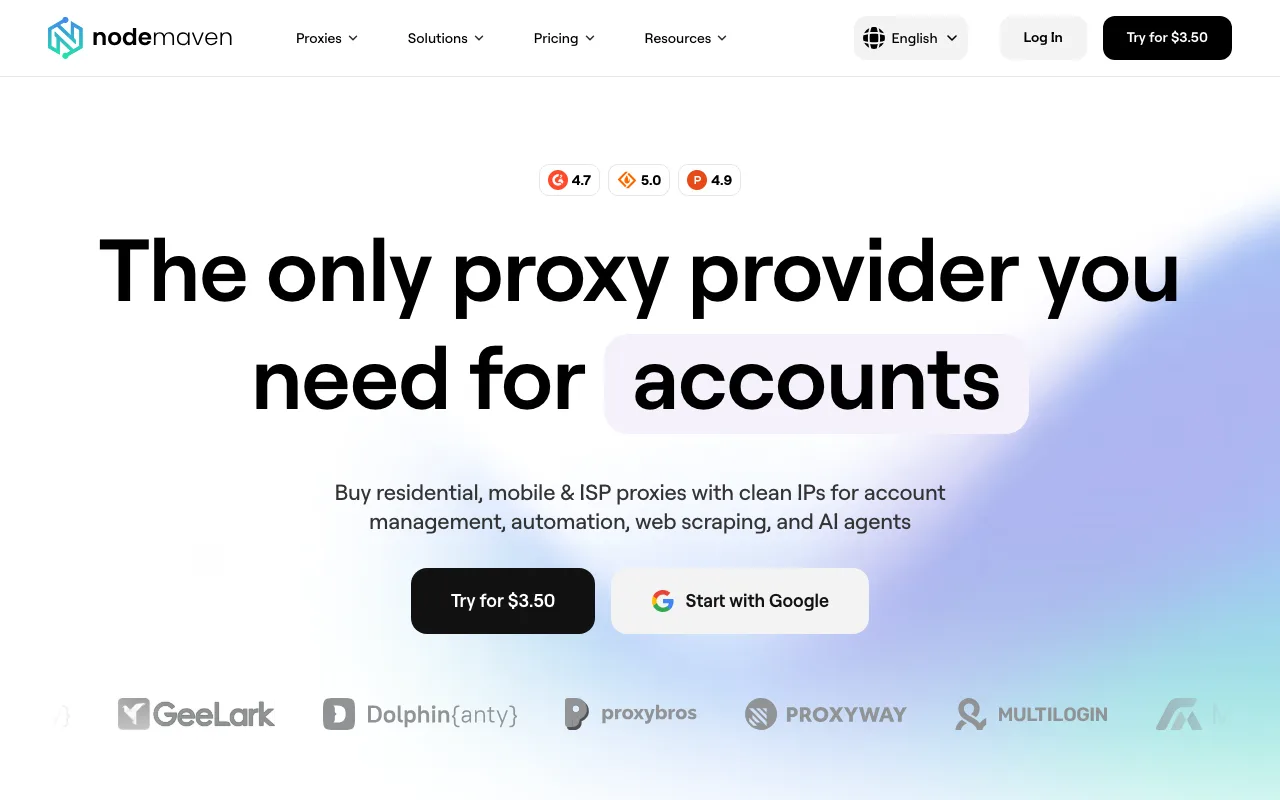
NodeMaven filters its pool before it reaches you, which means fewer wasted requests on already-burned addresses. Worth the premium for account-heavy work.
Review last updated 2026-08-20 · How we rate providers
Scorecard
Pros
- Screens IP quality before delivery, so fewer addresses are dead on arrival
- Traffic does not expire
- Sticky sessions up to 24 hours, useful for account workflows
- Popular with affiliate and account-management users for its clean IPs
Cons
- Costs more per gigabyte than the budget tier
- Pool is mid-sized rather than large
- Documentation is adequate but not deep
- Younger company with a limited public record
Privacy, jurisdiction & audits
Who the company answers to legally, what it keeps, and whether anyone independent has checked.
| Legal jurisdiction | Lithuania outside 5/9/14 Eyes |
|---|---|
| Logging policy | Not a privacy service; operational logs by design |
| Independent audits | None published |
| Anonymous payment | Crypto accepted |
| How IPs are sourced | Opt-in partner network with an IP quality filter that discards addresses already flagged by major targets. |
NodeMaven plans & pricing
Advertised rates as of August 20, 2026. VPN promo rates normally require the prepaid term shown and renew at the higher rate; proxy pricing falls with volume. Confirm on NodeMaven's own site before buying.
| Plan | Price | Min spend | Notes |
|---|---|---|---|
| ResidentialResidential Proxies | $5/GBmonthly, traffic never expires | $20 | Filters out low-quality IPs before they reach you |
| MobileMobile Proxies | $7/GBmonthly | $30 | |
| ISP staticStatic ISP Proxies | $3.50/IP/momonthly per IP | $35 |
Features
Our NodeMaven review
Most residential networks hand you whatever address the pool offers, and a meaningful share of those are already flagged by the site you are targeting. You pay for the gigabyte anyway. NodeMaven screens addresses against quality signals before delivery and discards the ones that will not work.
That changes the effective cost. A higher headline price per gigabyte with a much lower waste rate can be cheaper per successful request than a bargain network that burns half your traffic on dead IPs.
Sticky sessions run up to twenty-four hours, which suits account management, affiliate work and any process that needs to look like the same person over a long period. Traffic does not expire, which is unusual outside IPRoyal.
The pool is mid-sized at around thirty million, and the company is young. Documentation covers the basics without going deep, and support is responsive across chat and Telegram.
Recommended when IP quality matters more than the raw per-gigabyte rate, particularly for account-driven workflows rather than bulk crawling.
Notable facts
- Filters IP quality before addresses are issued to customers
- Sticky sessions up to 24 hours
- Purchased traffic does not expire
At a glance
| Founded | 2021 |
|---|---|
| Headquarters | Vilnius, Lithuania |
| Service types | Residential Proxies, Mobile Proxies, Static ISP Proxies |
| IP pool | 30M addresses |
| Country coverage | 150 |
| Proxy protocols | HTTP(S), SOCKS5 |
| Rotation | Sticky sessions up to 24 hours, or per request |
| Starting price | $5/GB |
| Money-back guarantee | 3 days |
| Free trial | 2 days |
| Free tier | No |
| Support | chat, email, telegram (24/7), account manager on larger plans |
Frequently asked questions
What does IP filtering actually do?
It checks addresses against quality and reputation signals before handing them to you, so fewer requests fail on IPs that were already blocked by your target.
Is NodeMaven worth more per gigabyte?
For account workflows and targets that block aggressively, usually yes, because waste falls. For tolerant bulk crawling, a cheaper network wins.
Does traffic expire?
No, purchased gigabytes remain on the account.
Bottom line
NodeMaven filters its pool before it reaches you, which means fewer wasted requests on already-burned addresses. Worth the premium for account-heavy work.
Check current NodeMaven pricing →