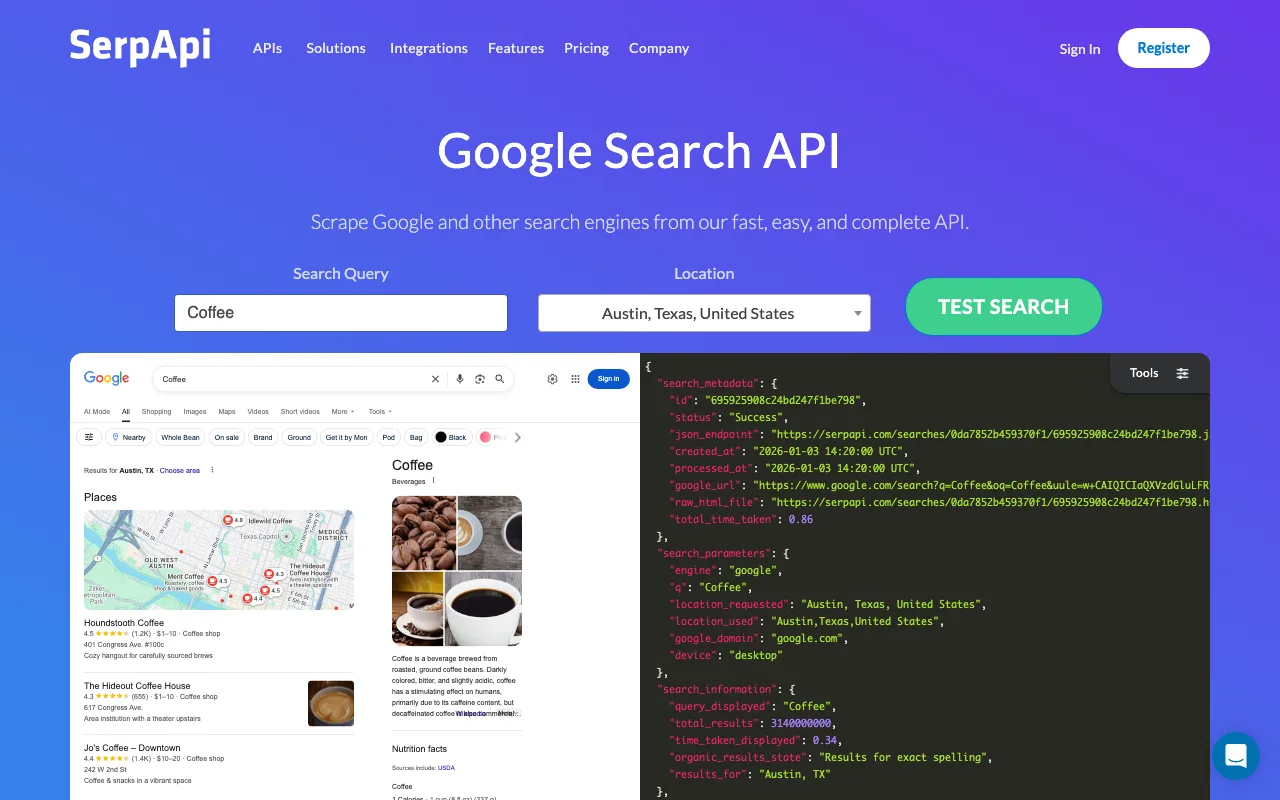
SerpApi Review
SerpApi does one thing: it turns search engine results into clean structured JSON, reliably, and takes on the legal exposure for doing it. Expensive and worth it if search data is your product.
Review last updated 2026-08-20 · How we rate providers
Scorecard
Pros
- The most complete and reliable parsed search-results API available
- Covers Google, Bing, Baidu, YouTube, Maps, Shopping, Scholar and more
- Legal shield: SerpApi assumes responsibility for the scraping it performs on your behalf
- Responses are structured JSON with a stable schema
Cons
- Far more expensive per request than general scraping APIs
- Search engines only, so it is a single-purpose tool
- US jurisdiction
- Costs scale steeply with volume
Privacy, jurisdiction & audits
Who the company answers to legally, what it keeps, and whether anyone independent has checked.
| Legal jurisdiction | United States in the 5 Eyes |
|---|---|
| Logging policy | Not a privacy service; operational logs by design |
| Independent audits | None published |
| Anonymous payment | Card / PayPal only |
| How IPs are sourced | Managed proxy and browser infrastructure operated by SerpApi. |
SerpApi plans & pricing
Advertised rates as of August 20, 2026. VPN promo rates normally require the prepaid term shown and renew at the higher rate; proxy pricing falls with volume. Confirm on SerpApi's own site before buying.
| Plan | Price | Min spend | Notes |
|---|---|---|---|
| FreeScraping APIs | Freefree forever | Free | 100 searches a month |
| DeveloperScraping APIs | $15/1k requestsmonthly | $75 | 5,000 searches; premium pricing for parsed SERP data |
| ProductionScraping APIs | $5/1k requestsmonthly | $150 |
Features
Our SerpApi review
Scraping search results yourself is a special kind of misery: aggressive anti-bot protection, layouts that change weekly, and dozens of result formats that all need parsing. SerpApi absorbs all of it and returns a stable JSON schema.
Coverage extends well beyond Google web results to Maps, Shopping, News, Images, Scholar, YouTube, Bing, Baidu, DuckDuckGo and more, with location targeting down to city level, which matters for local rank tracking.
The legal position is unusual and worth understanding: SerpApi states that it takes on responsibility for the scraping it performs on your behalf, backed by its own legal analysis. That is a meaningful risk transfer for companies whose counsel is nervous about search scraping, though no vendor statement replaces your own legal advice.
The price reflects the specialization. Search requests cost several times what a general scraping API charges per page, so a high-volume rank tracker will spend real money.
If search data is incidental to your work, a general scraping API or a cheaper SERP endpoint from Thordata or Bright Data will do. If search data is your product, SerpApi is the reliable choice.
Notable facts
- Parses results from Google, Bing, Baidu, YouTube, Maps and more
- States that it assumes legal responsibility for the scraping it performs
- Free tier of 100 searches a month
At a glance
| Founded | 2017 |
|---|---|
| Headquarters | Austin, Texas, US |
| Service types | Scraping APIs |
| Country coverage | 100 |
| Proxy protocols | HTTP(S) |
| Rotation | Automatic, handled entirely by the platform |
| Starting price | Free |
| Free tier | Yes |
| Support | email, chat, knowledge-base, account manager on larger plans |
Frequently asked questions
Why is SerpApi more expensive than a general scraping API?
Search engines are among the hardest targets, and SerpApi maintains parsers for dozens of result formats that change constantly. You pay for the maintenance you are not doing.
What does the legal shield mean?
SerpApi states it takes responsibility for the scraping it carries out for customers, backed by its own legal position. It is a meaningful risk transfer but not a substitute for your own legal advice.
Are there cheaper SERP options?
Yes, Thordata, Bright Data and Oxylabs all sell SERP endpoints at lower prices, generally with less coverage and less consistent parsing.
Bottom line
SerpApi does one thing: it turns search engine results into clean structured JSON, reliably, and takes on the legal exposure for doing it. Expensive and worth it if search data is your product.
Check current SerpApi pricing →